
Toll of the Bells

As I departed Guimarães on this 9th day of my Portugal’s North Coast and Peneda-Geres bicycle tour, I only had a very short day of riding ahead of me, just a 36km roll to my next main destination, the picturesque old town of Amarante located on the Tâmega river, which is the longest tributary of the Douro river. I decided to follow the historic Rota do Românico route, which would have me meander through some utterly stunning countryside, and which would include a nice amount of climbing as well.

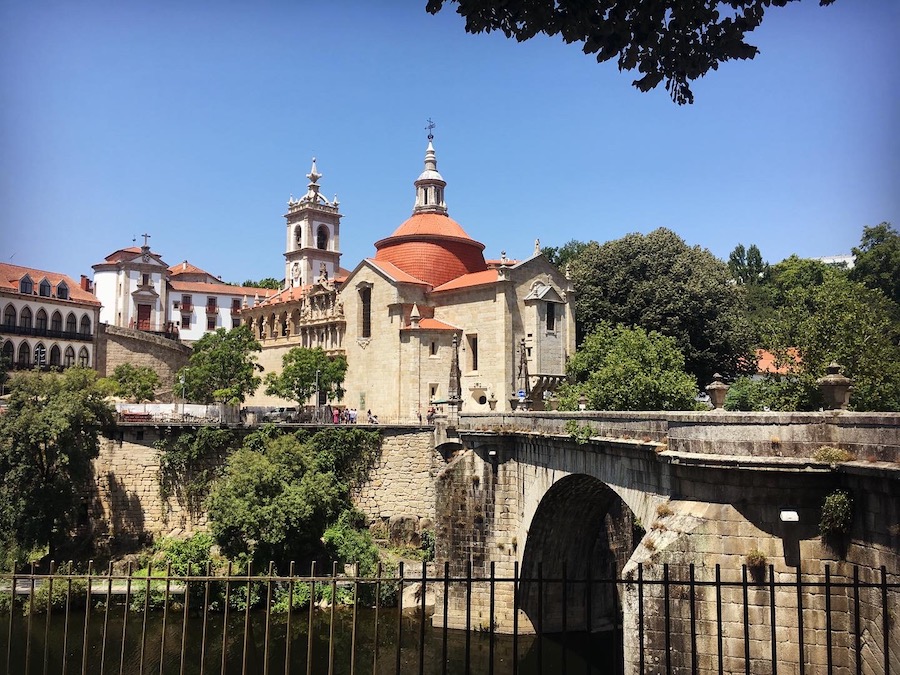
Amarante’s origins date back to the primitive peoples that hunted and gathered in the Serra da Aboboreira, sometime during the Stone Age. Although the city was founded in 360BC, it wasn’t until Gonçalo, a Dominican friar, who was born in Guimarães, settled in the area in the early 13th century following his pilgrimage to Rome and Jerusalem, that the city really started to develop, including the construction of its now famous stone bridge.
The bells, they do toll.
The price to be paid, they mark.
Angels keeping score.

‘Toll of the Bells’ by Jyri Manninen

I arrived in Amarante already around lunchtime, and I was fortunate enough to be granted an early check-in to my accommodation at the Des Arts Guesthouse, a charming building with more than 100 years of life. Its decor and suites are a tribute, in addition to the area’s history, to the artists who are part of Amarante’s memory. So, with plenty of time on my hands, it was time to check out the old town and the famous stone bridge; and just by the bridge, I ended up coming across a celebrating wedding party exiting the Igreja e Mosteiro de São Gonçalo to the loud chimes of the church’s bells. From there, I took an easy stroll to soak in the peaceful atmosphere of this historic location by following a loop that would take me along both banks of the Tâmega.
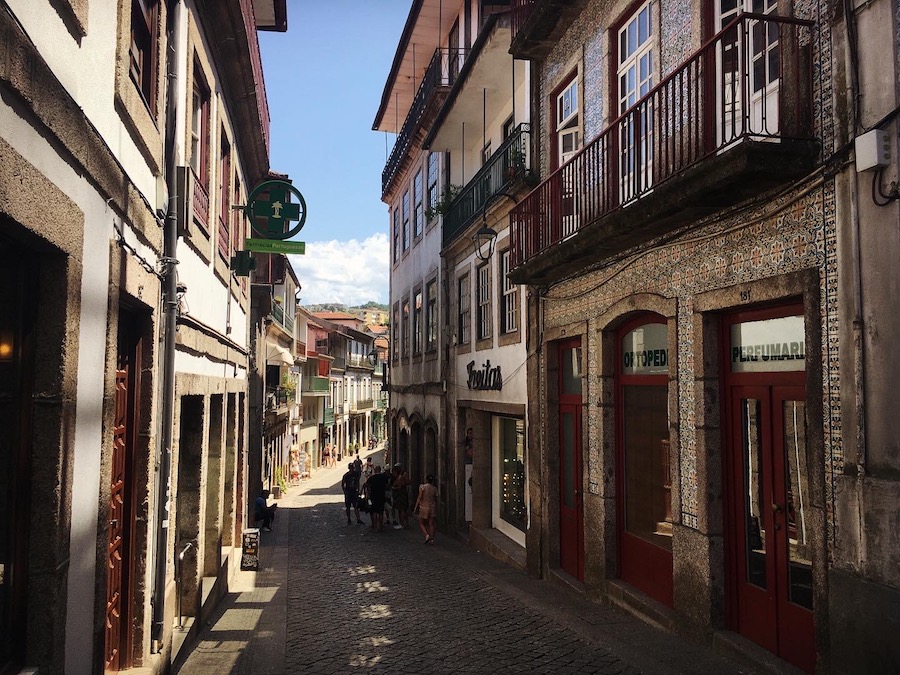

Getting the chance to visit Amarante was an absolute treat, and it was also a great way to spend my last easy day before the commencement of the return leg to Peniche, which would include several long days in the saddle. However, I knew that, one day, I would come back to visit this region, but most likely on foot, and with much more time to explore and discover its beauty.

Be blessed,
Jyri
Santuário


After having arrived in Guimarães in the early afternoon, the manager at my hostel suggested that I also go and visit Penha Mountain, in addition to sightseeing around the city, and what a great recommendation that ended up being, as the place was absolutely amazing!

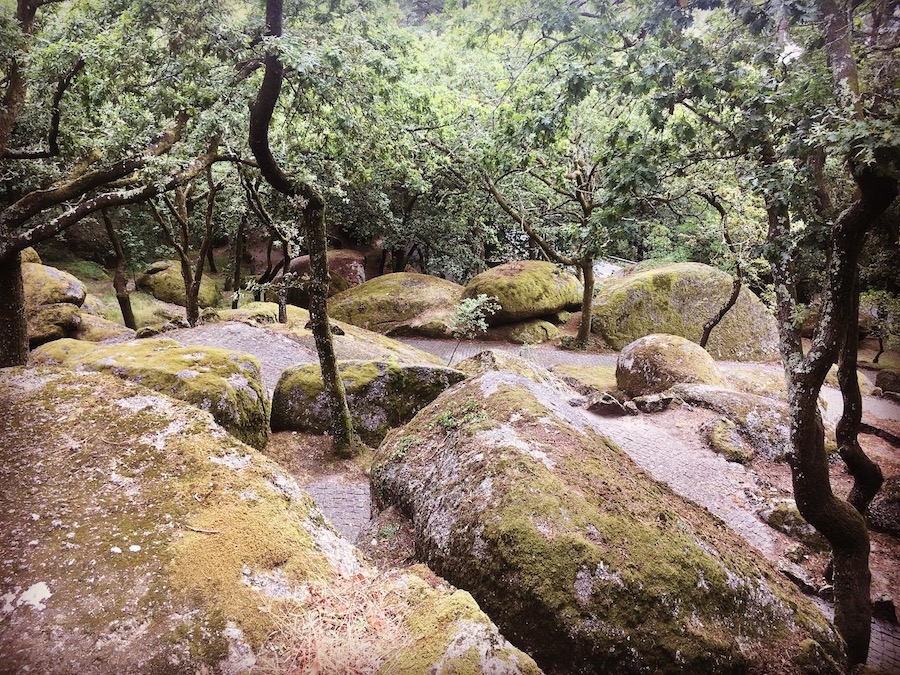
Monte da Penha is the highest point in the urban area of Guimarães, and the easiest and most scenic access to reach the summit, which is at an altitude of 586 metres, is to take the teleférico, or cable car, from the south-east edge of the city. Thanks to its natural characteristics, Penha Mountain is one of the major tourist attractions in Guimarães. It is famous for its unique natural landscapes, which are punctuated by rich flora, caves and several granite outcrops, which provided shelters for acts of celebration during the Chalcolithic and Bronze Ages. The abundant archaeological remains collected in these natural cavities are made up of ceramic fragments, as well as various types of lithic and metallic objects, which can now be viewed at the Museu da Sociedade Martins Sarmento in the city. 

One of the most important sites on the mountain is the Penha Sanctuary or Santuário da Penha. This sanctuary is a very important pilgrimage centre, which is visited by scores of pilgrims and tourists alike, especially during the summer months.

The storms of life rage.
Chaotic, manic motion.
Yet thine eye be calm.

‘Santuário’ by Jyri Manninen


I’ll conclude by saying that Penha is just an amazing place to relax and re-energise by going for casual, mindful nature walks, or just simply sitting in silence. Being graced with the majestic views from the Miradouro Penha, which can even extend as far as the Atlantic ocean, certainly adds to the beauty and depth of the experience.

Bênçãos e graça para você.
Jyri

Escape


On this day I would change course due east to follow the Lima River inland to the edge of the Peneda-Geres National Park, a comfortable 70km ride with a nice 400 odd metres of climbing. As I quickly revisited Viana do Castelo in the very early morning hours, I took in the famous ship, the Gil Eannes. Between 1955 and 1973, the Gil Eannes was the flagship of the Portuguese White Fleet that operated in codfish fishing in the seas of the Grand Banks of Newfoundland and Greenland. It also served as a maritime authority, mail ship, tug, icebreaker, general support ship for Portuguese fishing vessels, as well as a hospital ship.


After leaving Viana, in a light, yet warm morning drizzle, it was pretty much a head down, bum up spin to Ponte de Lima, where the famous Roman and medieval stone bridge is the centerpiece. Visiting this bridge would also be a reconnection with my first ever camino walking trek, the Camino Portuguese, which I undertook back in the Easter period of 2017. At the same time, it was both a very weird, but also satisfying moment to be back at this location, and to think of all that had happened during the interim years.

Proceeding onwards from Ponte de Lima, I was clearly now into wine growing country. The morning fog had lifted, and with the sun now brightly shining in the sky, the warmth and humidity started to ramp up as I passed numerous vineyards en route to the next major regional town of Ponte da Barca, where I decided to have an extended lunch break by the river with views of its own Roman age bridge. Once rested and refreshed with some pastries and a few bottles of Sagres, I started the final segment of my ride to the day’s destination at Lima Escape Camping and Glamping, which is located on the banks of the Lima River, and right at the border of the Peneda-Geres National Park.

On the way up high,
to where the Lime comes to life.
I made my escape.

‘Escape’ by Jyri Manninen

After getting my camp set up, I headed off to do some late afternoon exploring on foot, discovering the entrancingly peaceful and serene Lagoa de Chão D’Além. At this hidden spot, I felt a wave of profound relaxation and calm wash over me as I spent a moment sitting by the water’s edge, just silently listening to the gurgle and hiss of the water as it flowed between the rocks.


Upon returning to camp, I hopped into my hammock accompanied by a grande, ice-cold bottle of Sagres to see in the sunset. As the light glistened and sparkled over the Lima river below, and then gradually faded away into night, I fell into a deep trance-like state, one in which I felt that I’d finally cut ties with the modern world. I’d finally made my escape.

Be blessed,
Jyri