On the other side.

Having just completed the Via Algarviana camino trek just a few days ago, I was now already off on my next adventure, the 4th leg of the Life on the Run Tour de Portugal bicycle adventure. This would also be the final journey that I would share with Matilda before her retirement. It would be a 2 week long, approximately 1000km exploration of the northern coastline of Portugal and then the Peneda-Geres National Park, which is located over an area straddling the north-east border with Spain. The return trip would also include some amazing, historic places, but more about them in later posts.

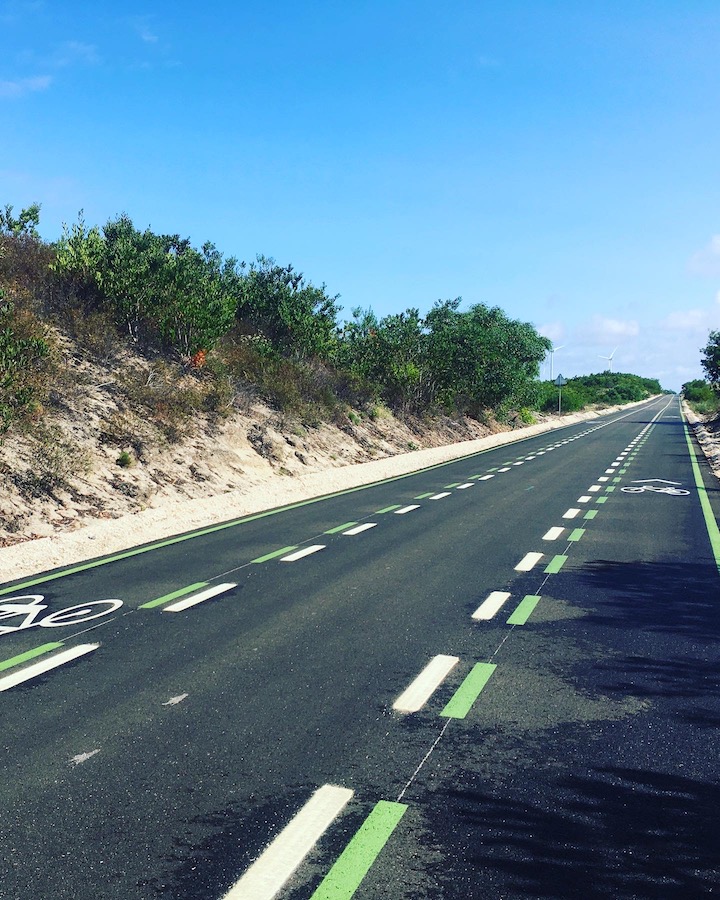
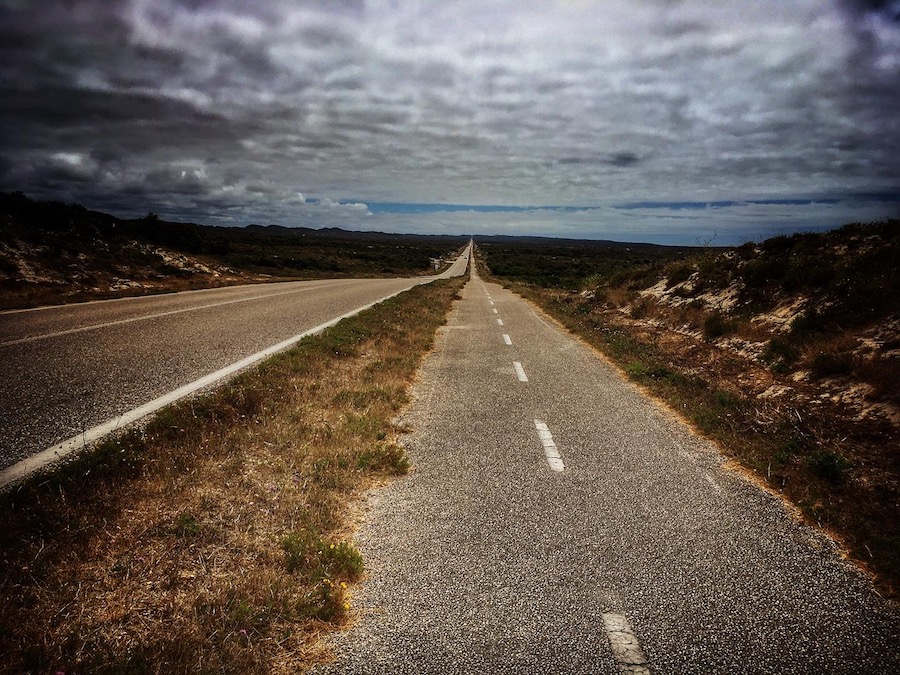
As we departed from Peniche, we passed by the Statue of Our Lady of Good Voyage, the patroness for wishing safe trips for the fishermen of the Peniche peninsula. Well, we weren’t going fishing, but I imagined that she was wishing us a safe journey too. After a brief glimpse of Baleal beach, one of the most popular in Portugal for tourists, in particular for beginner surfers, it was time to head to Nazaré via São Martinho do Porto. The ride there was over very familiar terrain, as I had run and rode over it many times before, both while living in this area some 6 years ago, and then on subsequent visits. 


After Nazaré, the scenery ahead would all be completely new, except for the city of Figueira da Foz, where I had visited briefly on a day trip with my mum several years earlier. Figueira da Foz would, in fact, end up being our destination for this opening day, a very solid effort of 150km. We handled it surprisingly well, despite not having ridden together for over 2 years.

When you amply roam,
your limits, you will surpass.
The unknown awaits.

‘On the other side’ by Jyri Manninen


I had to remind myself that the point of this journey wasn’t to make it a purely physical performance challenge, and so I had to do my very best to pump the brakes a bit. It was much more important to enjoy the awesome scenery, as opposed to worrying about what our average speed and daily distances were going to be. Well, I guess it’s hard to not keep behaving as an athlete, even though my competitive days are now long behind me in the rear view mirror. I have to admit that I still haven’t quite found the right balance with this, but it’s most likely due to now only having a 2 week time window to ride, while having so many intriguing places that I still wanted to see. One day, though, I will head off on a trip without any time constraints, and then I can truly move with complete freedom, but that time is not yet nigh. However, In many ways, this long first day would end up being a rather good reminder of the strength of Matilda’s and my 6 year relationship, which had originally developed during our 55 day, 4200km ride from Finland to Portugal.

Our first major interim destination would be the village of Carreço, some 400km further up the coast, where that epic inaugural ride had, in fact, ended back in late 2017. I already wondered how I would feel finally connecting back to that major locus of change in my life. It felt like it would actually provide the opportunity, in a sense, to resume that original journey once again?

Be blessed,
Jyri

Família: Peniche Peninsula Tour


After having completed the Via Algarviana camino in the south only a few days earlier, I was now in Peniche immediately getting ready for the next adventure. With the help of my long time friend and ghostrider, Mr. Pepe, we got Matilda all set up for our next cycling tour, which would begin in just two day’s time. But first, a local, prologue test-ride of about 12km around the Peniche Peninsula! Sit back and enjoy the roll!


Peniche is a seaside municipality and a city in the western region of the historical province of Estremadura and the Leiria District, with the city itself having a population of about 15,600 inhabitants. The area is known for the picturesque raw beauty of the peninsula with its sharp, rocky cliffs, as well as its long beaches, which are popular for recreational activities and sports such as surfing, windsurfing, bodyboarding and kite surfing, with the most well known being Supertubos, where the waves form fast and powerful tubes, considered among the best in Europe.

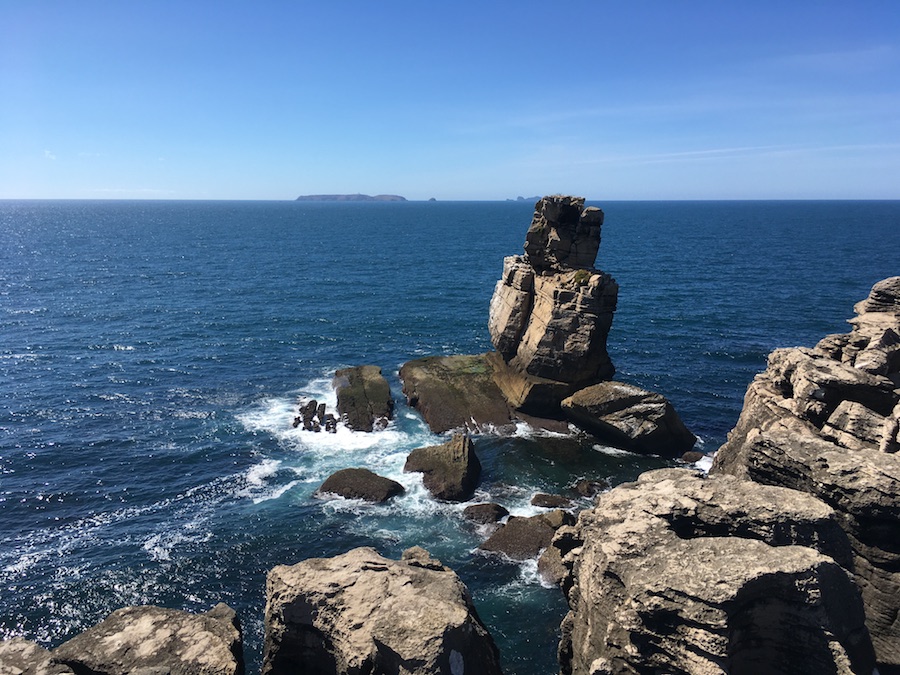
From the end of the peninsula, in the distance you can see the remote Berlengas islands, which form one of the world’s first nature reserves. They are located about 10 kilometres offshore, and can be visited by boat, and there’s even a camping ground and hostel there for overnight stays during the summer holiday season. Then there is the Peniche Fortress, which is a notable example of Portuguese coastal defences. During the authoritarian period of rule known as the Estado Novo, or Second Republic, in the 20th-century, it was used as a prison for communists and other opponents of the regime.

Our love holds us close,
in times of trouble and joy.
Yet alone, I ride.

‘Família’ by Jyri Manninen


As Pepe and I completed the final few kilometres of our test-ride with Matilda, while soaking in the amazing views over the cliffs to the south, I began to shift my focus of attention on what we were about to undertake over the next few weeks, the 4th stage of our cycling tour of Portugal. This next phase of our exploration of Portugal would see Matilda and I track up the coastline north as far as Carreço, which was actually the destination of our epic ride from Finland back in 2017. From there, we would turn inland to follow the Lima River all the way to the Peneda-Gerês National Park, which straddles the border with Spain. After that, we would start our return journey back south, but not before visiting the beautiful, historical cities of Guimarães and Amarante. We, of course, would hope to have you come along for this latest adventure too.

Be blessed,
Jyri

Sagrado: Tour de Sagres


Having just completed the over 300km long Via Algarviana camino the previous day, what better way to celebrate than to go out for another walk the day after! I had a full day off to explore Sagres, which is located at the very south-west corner of the Algarve, as well as have some much needed R and R afterwards.

The name Sagres derives from Sagrado, which means holy, owing to the important local religious practices and rituals that occurred during the pre-history of the nation. Approximately 1900 people call Sagres home, but given that it’s a mecca for tourists, surfers and scuba divers, the actual number of people in the area at any given time is actually much, much higher. Historically, Sagres is connected to the early Portuguese Age of Discovery; and, very interestingly, it is the end of the world’s longest estimated straight-line path over land, which extends over 11000 km to near Jinjiang in the People’s Republic of China.

I commenced by walking tour from the Sagres Sun Stay hostel and surf resort, where I was staying for 2 nights before heading off to my next adventure, a cycling tour of the Portuguese north coast and the Peneda-Gerês National Park, which straddles the Portugal-Spain border in the north-east. However, ahead of me now was just a very chill, active recovery stroll of about 10km to see the main sites of Sagres. After passing the main roundabout in the town centre, I popped down to Praia do Tonel, one of the main beaches used by the local surf schools. From there, it wasn’t far to the Fortaleza de Sagres (or Fortress of Sagres), which is, undoubtedly, one of the key sites of interest to visit in the area.


As I made my way to the fort’s entrance gate, I got to enjoy some majestic views of the sharp cliffs that stretch all the way out to Cabo de São Vicente some 6km away, the end point of my Via Algarviana walking trek. Henry the Navigator ordered the fort’s construction to protect the strategic coastal position at Ponta de Sagres, as well as the coves that offer shelter for ships. At the site, you can find the very small, but all the more wonderful, Church of Santa Maria, which was constructed during the reign of King Manuel I of Portugal. It was consecrated in 1519 to the invocation of Nossa Senhora da Graça (or Our Lady of Grace), and its interior is adorned by a valuable gilded altarpiece from the Chapel of Santo António, as well as two images of Saint Vincent and Francis of Assisi, from the 17th and 18th century.

In May 1587, explorer Francis Drake disembarked 800 men who assaulted the fortress of Sagres. After two hours of intense combat, fortifications adjacent to the fortress were destroyed and its artillery was pillaged. After this, and some later attacks, the fortification was remodeled in the 16th, 17th and 18th centuries, with its current form dating back to 1793.

After leaving the fortaleza, I descended down to Praia da Mareta to enjoy a beer at a beach side café-bar, while soaking in the atmosphere, as well as to just sit firmly in the personal satisfaction I felt after having just completed the latest big ticket item that was on my life’s bucket list.

The ultimate truth,
within the fire it is forged.
Sacred ash remains.

‘Sagrado’ by Jyri Manninen


After returning to the hostel, I spent the afternoon relaxing with a good meal, as well as a few ice-cold beers and some sweet aniseed Xarão on the terrace by the pool. As the afternoon merged into the evening, I fired up my final camino cigar, which I had bought at the beginning of my Via Algarviana trek, but to enjoy only after its completion. The combustion of tobacco, while watching the smoke rise up and disappear into the ether, leaving only the ash as a memory of what was, holds a much deeper significance for me. I find this deliberate and considered act, in its true form, to be a spiritual ritual. It’s a very fitting, metaphorical way to mark and celebrate the successful completion of a journey, and a specific chapter in life, and then, on the same occasion, to set one’s sights and attention on the next stage, whatever that may be.


While the achievement of specific goals is certainly important, it is also essential to take pause at these milestones, to ensure that the path you are on is, in fact, the right one, and to recalibrate your direction, if it is not.

Be blessed,
Jyri